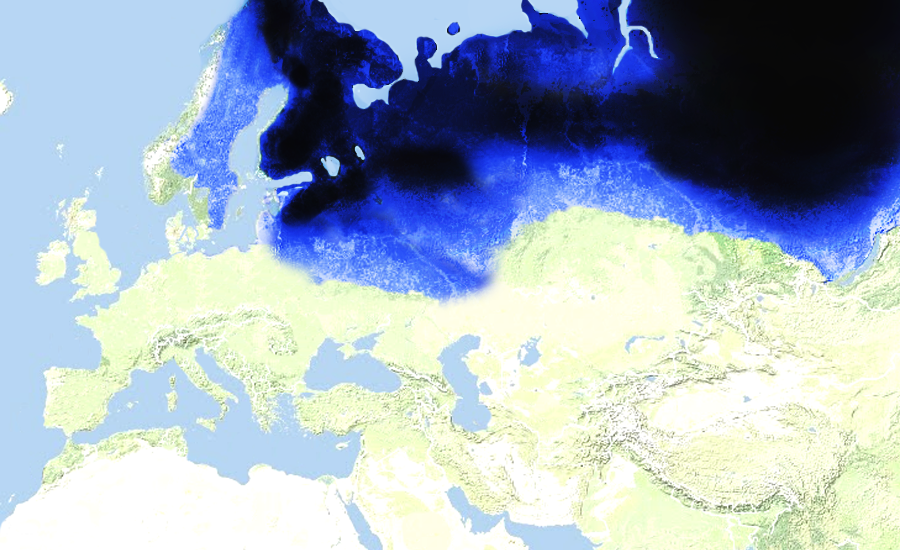
World Y-DNA frequencies

Neohumanid mutative history

Y- Population tree

DNA studies

  • N (M231) The Mesolithic marker of expansion in North Asia
    • N1 (LLY22g) The most dominant lineage of M231
      • N1a (M128) Represents the Eastern most expansion in Eastern Siberia, Mongolia, Beringia, Manchuria, marker of Nordid intrusion in Korea
      • N1b (P43) The Ultra Nordid marker of Northern SiberiaN1b1 (P63) The Eastern Ultra Nordid population of Siberia
        • N1b2* The Western N1b population, established itself in Russia, Karelia & Finland
          • N1b2a (L665) Ultra Nordid marker in Finland & Karelia
          • N1b2b (L666) Ultra Nordid marker in Karelia & Russia
      • N1c (M46) The most successful lineage of M231 enjoys predominance in various Nordic regions in Eurasia
        • N1c1 (M178) The Ultra Nordid Mesolithic marker of Nordic Europe & the Yakutian regions of Siberia
          • N1c1a (P21) marker of the Omogoj Turkic tribe in Yakutia
          • N1c1b (P67) Predominant lineage amongst Turkic speakers in Yakutia
          • N1c1c (P119) Siberian lineage
          • N1c1d (L708) The Finno-Ugric marker, marker of Finnic substratum amongst Indo-Europeans in Nordic Europe
            • N1c1d* Finnids that didn't enter Europe in the Mesolithic
            • N1c1d1 (L1026) Exclusively Finno-Nordid Marker, enjoys predominance in Nordic Finland
              • N1c1d1a (L550) A lineage established in Scandinavia, Baltic Europeans, a Varganian marker in Southern Europe
              • N1c1d1b (1022) Finno-Karelian lineage
              • N1c1d1c (1032) Kazakh lineage
      • N1d (L727) A Siberian marker that was spread in historic times in the Balkans